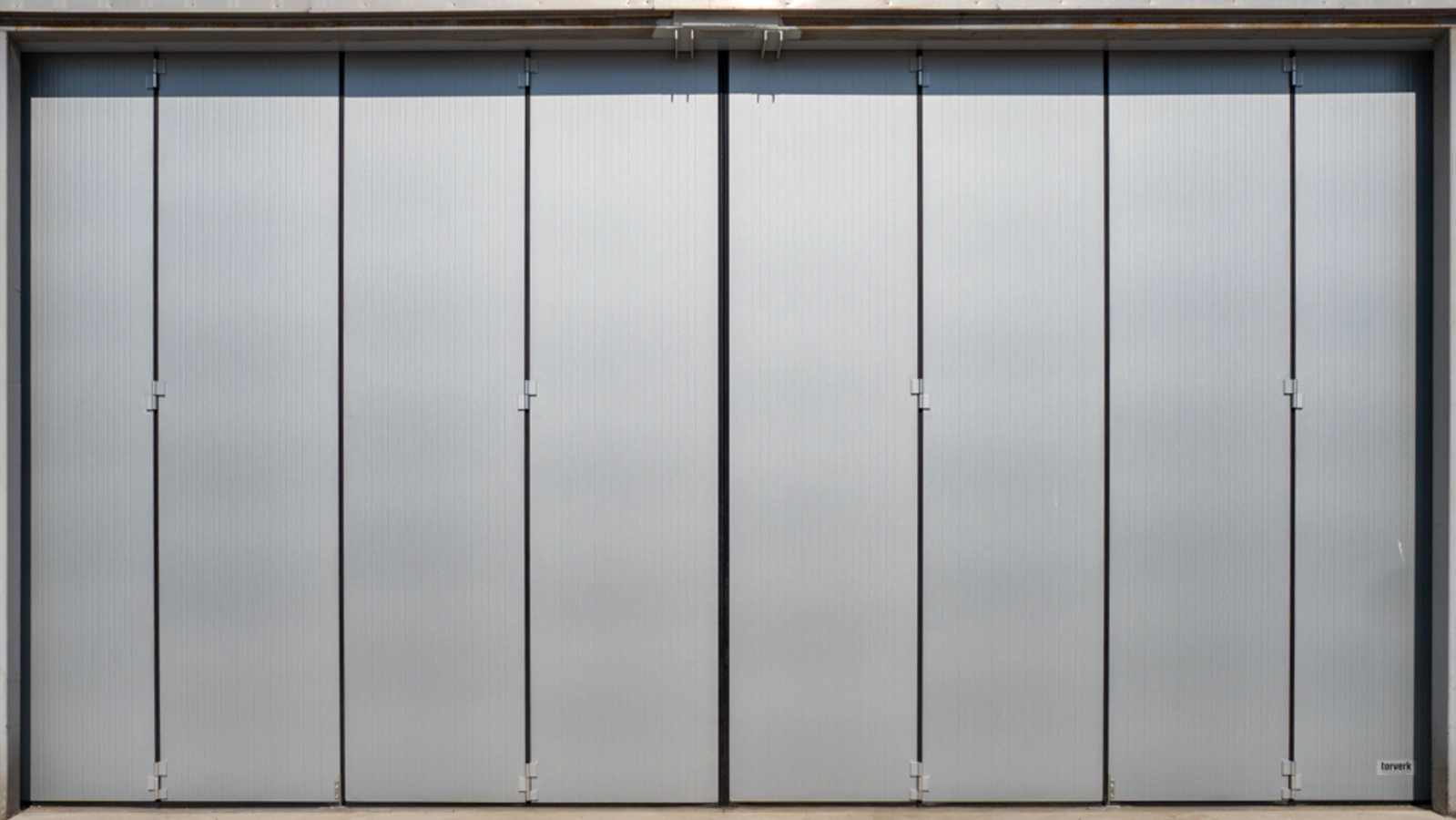
The larger the door opening, the greater the surface area for heat loss—and the higher the demands on the door's construction, sealing, and structural stability for insulation to work in practice.
Short Answer
Door size has a major impact on heat loss. The larger the opening, the greater the potential for energy loss, and the higher the requirements placed on the door''''''''s design, tightness, and rigidity.
As a result, insulation in large folding doors cannot be assessed in the same way as in smaller doors or static building elements.
Why Large Doors Are a Special Challenge
Large industrial doors are exposed to forces that are far less significant in smaller openings:
- Wind load
- Self-weight
- Building movement
- Thermal expansion and contraction
For a door to insulate effectively, the structure must handle these forces without:
- Creating gaps
- Deforming over time
- Compromising the performance of the seals
This is why door size and energy performance are always closely linked to the torsional stiffness of the door construction.
Material and Surface Area Drive Heat Loss
In large doors, insulation performance becomes even more critical due to:
- A larger surface area for heat transfer
- A greater impact on the building''s total energy consumption
In practice, this means:
- Small improvements per square metre can have a major effect on energy costs
- Minor sealing flaws can lead to disproportionately large losses
For large doors, effective insulation is therefore essential—and both the structural design and the insulation material itself play a decisive role in overall energy performance.
The Role of Structural Stability in Insulation
For insulation to perform over time, the door must:
- Retain its shape
- Move in a controlled manner
- Seal tightly when closed
In large folding doors, structural stability and torsional rigidity are critical. A door that flexes or settles over time risks:
- Gaps forming in the seals
- Accelerated wear of sealing strips
- Thermal bridges
- Gradual loss of insulation performance
Torverk''s Perspective on Large Doors and Energy Performance
At Torverk, folding doors are always engineered based on the actual size of the opening and the intended use of the door.
We treat insulation, panel construction, and sealing systems as an integrated whole—especially in large openings where tolerances are small and performance margins are critical.
That''s why we assess energy performance in real operating conditions, not just by looking at the insulation value of individual components.
When Does Door Size Become a Decisive Factor?
Door size becomes especially critical in terms of insulation and heat loss when:
- The building is heated year-round
- The door represents a large portion of the building envelope
- The door is used frequently
- Indoor climate and energy costs are critical factors
In these cases, the door''''s structural design is just as important as the insulation itself.
Want to Learn More About Folding Doors and Construction?
On our folding door product page, you can read more about configurations, dimensions, and customization options.
Want to Compare the Insulation Performance of Different Doors?
With our door cost calculator, you can calculate and compare the energy costs of different doors before making a purchase. Enter door size, U-value, and purchase price, and the calculator will estimate annual energy costs as well as total lifecycle cost.
Try the door cost calculator